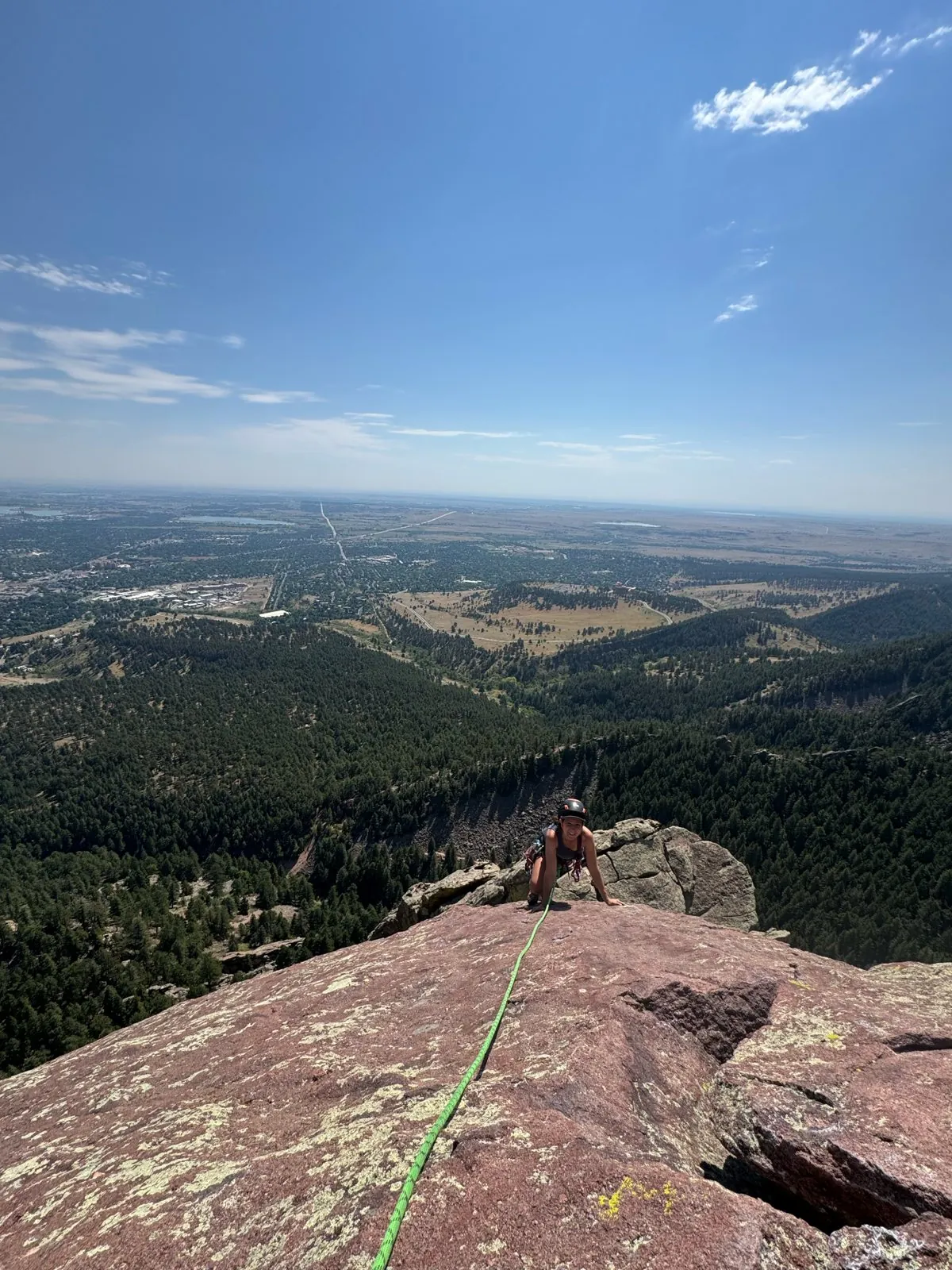
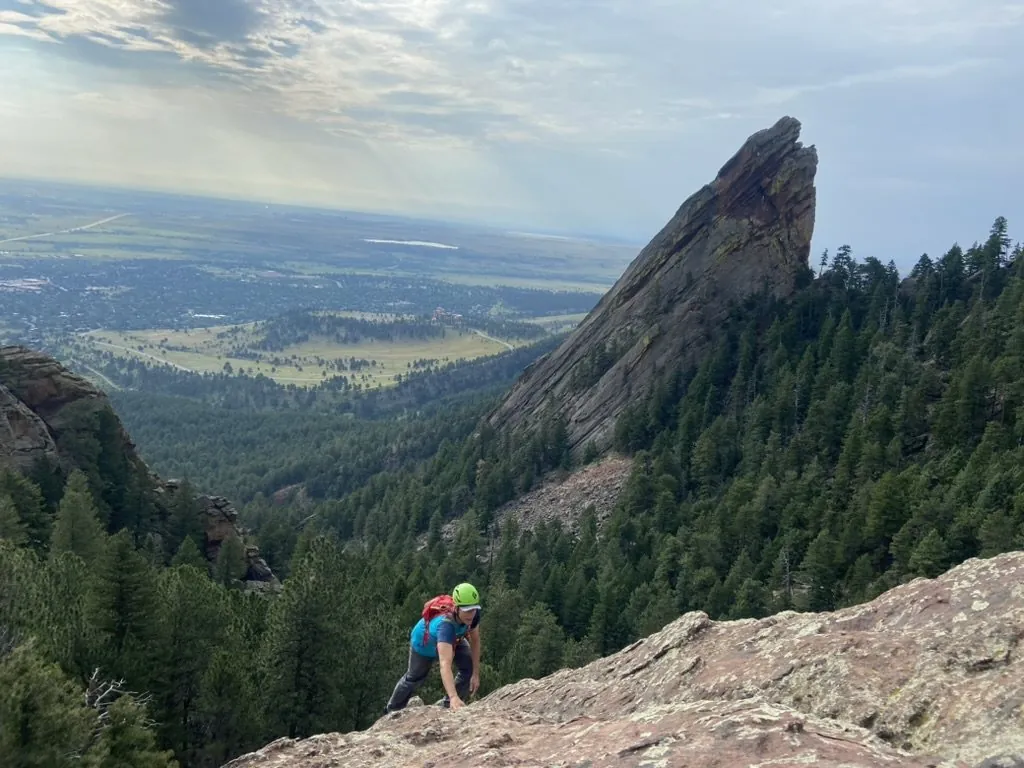
Why is this a classic?
The Third Flatiron is the most iconic of Boulder's Flatirons, and the Standard East Face route captures the essence of Flatiron climbing. It offers hundreds of feet of immaculate sandstone, easy yet exposed climbing, and a spectacular summit with one of the finest views of Boulder. Large historic iron bolts are found at several points along the route, and three rappels return climbers to the ground.
Why the Third?
Choosing between the Standard East Face of the Third Flatiron and the Direct East Face of the First was one of the harder calls in assembling the Boulder 15. They are both uber-Boulder classics. Ultimately, I chose the Third because of its unmistakable profile, its deep connection to Colorado climbing history, and the extraordinary praise it has received from some of Boulder’s most influential climbers.
The Third was the site of Colorado’s first recorded technical rock climb. Legendary Boulder climber and guidebook author Jim Erickson called it “undoubtedly the most famous of the flatirons,” while legendary Colorado mountaineer and guidebook author Gerry Roach described its Standard East Face as “THE classic Flatiron route” and “one of the finest easy climbs in the country.” For a collection of quintessential Boulder adventures, that combination of history, iconography, and enduring climbing tradition gave the Third the edge.
A note for Direct East Face of the First Flatiron loyalists: There may—or may not—be an alternate Boulder 15 universe in which the Direct East Face replaces the Standard East Face. Whether that universe can be found somewhere on this website is another question entirely.
Side-noteThe iconic Flatirons are composed of the Fountain Formation, an approximately 300-million-year-old sequence of sandstone and conglomerate. These rocks began as sediments shed from the ancestral Rocky Mountains and deposited in vast alluvial fans along the edge of the ancient range. For me, this geologic history adds another dimension to the Flatirons. My years as a geologist have taught me that knowing how a landscape formed can fundamentally change the way I experience it.
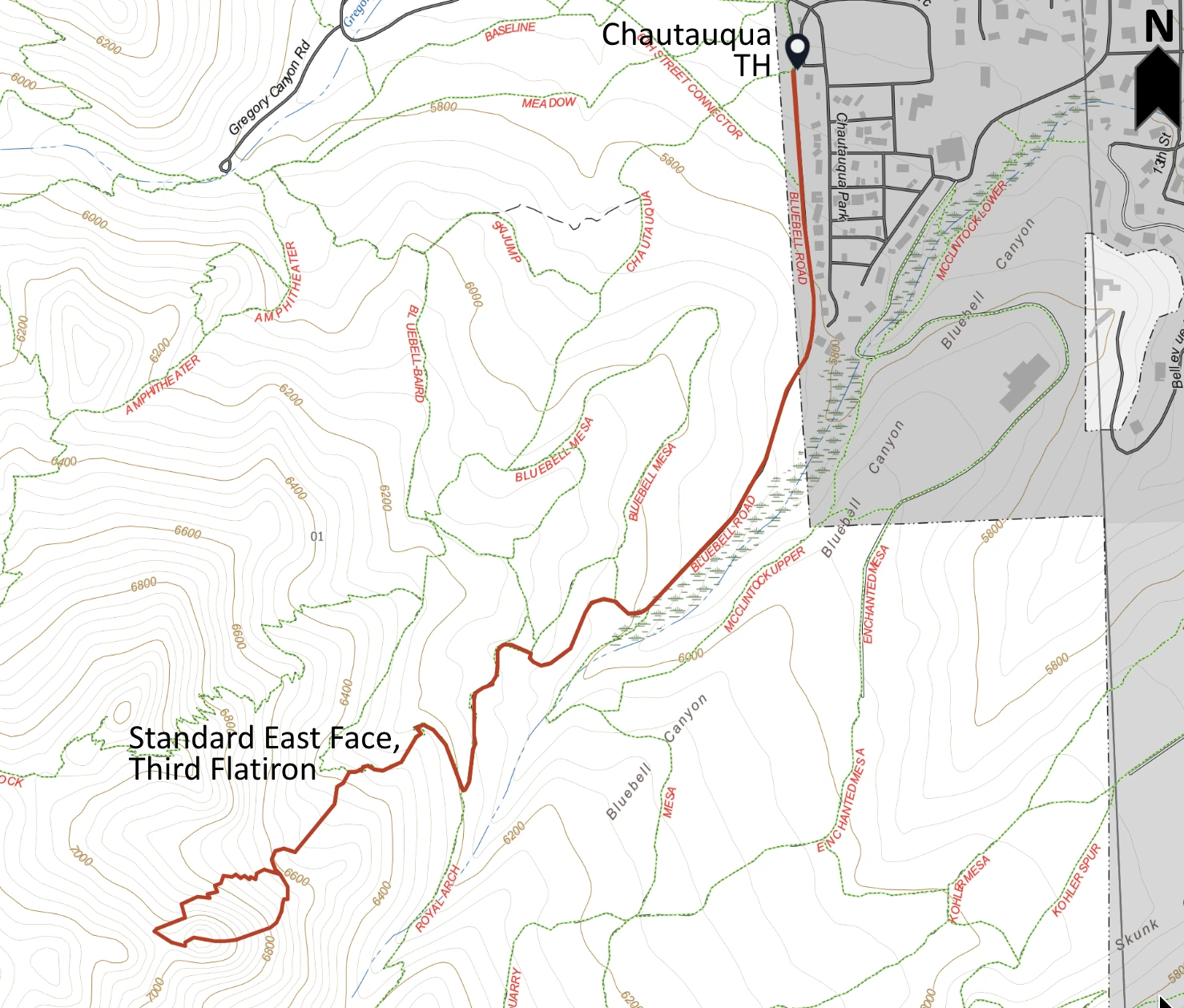
Basemap data courtesy of the U.S. Department of Agriculture, Forest Service.